
Speaking out, staying safe: why the refugee sector is being silenced, and what we can do about it
Posted by IMIX on June 1, 2026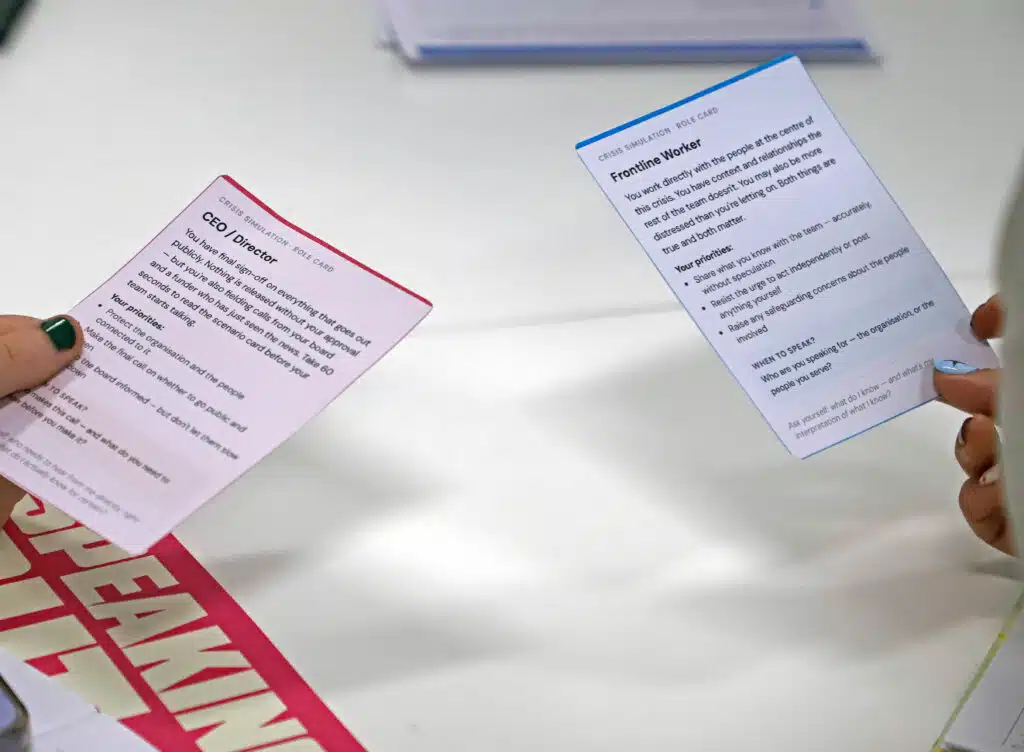
There is a question we have started hearing a lot from the organisations we work with. It usually comes quietly, often near the end of a conversation about something else. Should we even be posting about this?
A few years ago, that question would have been about strategy. Today it is about safety. The people asking are running English classes, food banks, befriending schemes and legal advice services. They are doing some of the most important community work in the country. And many of them have come to believe that the simple act of talking about that work in public might put their staff, their volunteers, or the people they support at risk.
They are not imagining it. This blog is about what is happening to the sector right now, why it matters, and what we are doing about it.
Two thirds of the sector has already been targeted
When we polled organisations across the migration and refugee sector in August 2025, 61% told us they had been targeted by hostility and abuse. Most of it happened on social media, but plenty arrived by email, by phone, and through hostile coverage in local press.
This is not abstract. It looks like a pile-on designed to exhaust a tiny team into silence. A threatening email to a named member of staff. A false story planted locally. A protest organised outside the door of a charity whose only crime is helping people. We have supported organisations through all of these, and we have seen what it does to the people on the receiving end.
And here is the part that should worry everyone: most organisations have no plan for when it happens. More than a third told us they had no crisis communications plan at all. Only 18% had something formal written down. When the worst arrives on a Friday afternoon, most groups are facing it with no framework, no support, and no one to call.
Fear is changing what the sector is willing to say
Ahead of our forum in April this year, 136 organisations and individuals told us what they were struggling with. We expected to hear about skills and capacity. We did. But the thread running through almost every response was something harder to fix. It was fear.
Organisations told us they were holding back. Not posting. Not commenting. Quietly shelving campaigns they believed in, because they did not want to become the next target.
This is the part that often gets missed. The hostility does not just upset people. It works. Every group that decides to stay quiet is a group whose story the public never hears. And the quieter the sector becomes, the more the loudest, most hostile voices get to define what people think about migration.
The cost falls heaviest on the smallest organisations, and on the people within them who have their own experience of migration. For them, this is not a policy debate happening somewhere else. It is something they carry personally. More than half of the people who registered for our forum had lived experience of migration themselves. Many wanted to tell their own stories. Many were afraid to.
Even when the sector does speak, it is talking to itself
There is a second problem, and it is one we hear about constantly. Even when organisations do communicate, they are mostly reaching people who already agree with them.
This is the real prize, and the real challenge. There is a large group of people, often estimated at around two thirds of the public, who hold mixed and movable views on migration. They are not necessarily hostile. They are persuadable. And they are not being reached.
Part of the reason is simple capacity. Almost no grassroots group has a dedicated comms person. The people running the social media accounts are also running the services, writing the funding bids, and answering the phones. There is no time for audience research or message testing. There is barely time to post.
But part of it is confidence. When the risk of getting it wrong feels so high, organisations stick to safe, familiar language aimed at people they know will respond well. Reaching out to new audiences feels like exposure. So the sector talks to itself, and the gap between it and the people it most needs to reach gets wider.
Nobody should be doing this alone
The thing that struck us most at our forum in April was how alone people had been. Organisations that had been doing this work for years arrived not knowing that there were others a few streets away facing exactly the same fears.
Isolation is not just lonely. It is a strategic weakness. Groups that cannot compare notes, share warnings about coordinated attacks, or pool what little resource they have are far more exposed than groups that can. The hostile environment thrives on that fragmentation.
And it takes a toll. People described carrying exhaustion and hope at the same time, day after day, usually without anyone noticing. For staff and volunteers who are themselves the target of the hatred their organisations exist to counter, that weight is heavier still. You cannot separate communications support from wellbeing support in this sector. They are the same thing.
What the sector actually needs
Here is the good news. What organisations are asking for is not complicated, and it is not expensive. Across everything we have heard, the asks are remarkably consistent and remarkably modest:
- A crisis communications plan they can adapt in an afternoon, not a 40-page document
- Clear guidance on handling hostility online: how to monitor it, when to respond, and when to stay quiet
- A safe space to talk honestly with peers, including about the things that did not go well
- Practical, ethical ways to involve people with lived experience without putting them at risk
- Connection. Knowing who else is out there, and being able to reach them
People are not asking for a transformation programme. They are asking for a holding statement template. A guide they can share with their team. Someone to call when it all kicks off.
What we are doing about it
This is the work IMIX has been building. Over the past year we have trained dozens of grassroots groups in crisis communications. We have sat alongside organisations in the middle of a pile-on, a hostile story, or a coordinated attack, and helped them through it. We have created practical tools, including a communications guide that people at our forum told us would be used.
But one day in London, once a year, is not enough. Organisations in Scotland, Wales, Northern Ireland and right across England are facing the same pressures with far less support. The peer network people told us they needed cannot live in a single day. And the help they are asking for needs to be there when the crisis happens, not at the next training date.
How you can help
To keep this going, and to take it to the communities that need it most, we have launched a crowdfunder with a target of £30,000. It will fund ongoing crisis support, regional events, a peer network, and free resources for the organisations that cannot get this help anywhere else. If you believe communities doing this work deserve to do it safely, you can support us. Because the answer to a hostile climate is not to go quiet. It is to make sure that the people with the most important stories to tell can keep telling them, safely.